Folio at Fifty!
Folio Illustration Agency Celebrates Its Half-century
Founded: London, 26 October 1976
Founded by Nicholas Dawe in the pre-digital world where transparencies, lightboxes and deadline dashes across the city for hand-created artwork were the norm, 50 years on Folio Illustration Agency remains at the forefront of the global illustration landscape and is the oldest UK-based agency still run in its original form by its founder.
A friendship with the artist George Underwood – who created the cover artwork for Marc Bolan’s first T Rex album and later David Bowie’s Hunky Dory and Ziggy Stardust – introduced Nick to the world of illustration and, after gaining 5 years’ experience working alongside the agent Andy Archer, he founded Folio on 26 October 1976.
After a year in a basement shop in Edgware, the company moved to its legendary office in Lincoln’s Inn fields, where it was to stay until the Covid pandemic. Known locally as ‘The Lighthouse’ because the studio’s daylight lighting system ran at all hours as artists worked to hit deadlines, the office became a beacon of creativity where, every Friday, artists, art buyers and creative directors would catch up over a drink at the studio’s custom-built bar.
Key to Folio’s longevity is the quality and talent of its artists, coupled with the company’s ability to evolve while staying true to Nick’s founding principles: unique artistic talent, fresh artistic perspectives, impeccable client service. Today, Folio’s team of agents across the UK represents 66 of the world’s greatest talents, building long-term relationships while bringing new artists on board through its Showcase.
From Joe Petagno’s ‘Snaggletooth’ logo for Motorhead in the 1970s and Syd Brak’s iconic Athena posters in the 1980s via Jason Brooks’ distinctive millennial imagery for Pacha’s Hedkandi club nights to a car wrap design for San Francisco’s first fleet of Waymo driverless cars in the 2020s – and countless in between – Folio’s artists continue to deliver era-defining illustrations.
To celebrate the occasion, Nick has recorded a one-off podcast discussing the evolving challenges in the life of an illustration agent, and current Folio artists have created original artworks inspired by the idea of ‘Legacy’ which will be published in a special zine available in both printed and digital format.
Here’s to the next 50 years!
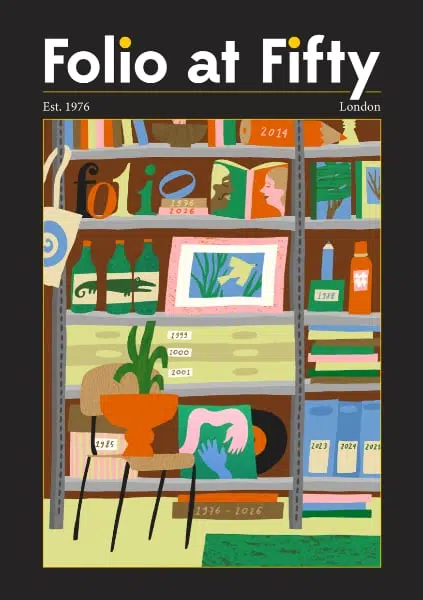
Folio at Fifty Zine
To mark our 50th, Folio artists have created work inspired by the theme of ‘legacy’. We have produced a one-off ‘Folio at Fifty’ zine to gather these artworks and other highlights from our fifty years.
Folio at Fifty Podcast
We have created a podcast interview with Folio’s founder, Nick, talking to our agent Kumi about surviving half a century in the illustration industry.

Podcast Extract
Edited transcript of podcast interview with Folio founder Nicholas Dawe
How did you get your start as an illustration agent?
I became very good friends with the illustrator George Underwood, who I met soon after leaving school and is now my oldest and dearest friend. When I was in my 20s, after spending time in Canada, I returned to England not knowing what I wanted to do. I had always been fascinated watching George work, and his agent, Andy Archer, was looking for someone to help him out – I went to meet Andy and he took me on.
My job was to run into the London design and ad agencies with all the artist portfolios. I would go to an agency, take their brief, call the artist to check they could do it, dash to the railway station, wrap up the package of reference material, fill out the form, and put the package on the Red Star train service. Then the artist would send the completed artwork back, I’d pick it up and take it to the agency. But they might need the work amended, so I’d return to the station, send it back to the artist … it was hectic, and there were so many jobs going on at the same time, with artists living all over the place.
In between meetings, I was normally in local Soho establishments, like the French House, Coach and Horses, and the Colony Room. I spent my life on the phone in the French. Andy introduced me to many of the Soho regulars, such as Francis Bacon and Lucian Freud, George Melly, Jeffrey Bernard, Daniel Farson, John Hurt – that was a perk of the job!
What was it like dealing with physical artworks?
All the artworks – whether acrylic, watercolour, oils – were terribly delicate. They had to be wrapped thoroughly. Oil paintings were put into a deep frame because they would take several days to dry, so you had to be extremely careful.
Still, there were some disasters. I remember one time I saw the porter had dropped an artwork between the train and the platform – then the train ran it over. Another time, I unwrapped a fine airbrush illustration on my desk and the art director cracked open a can of Coke that sprayed across the artwork and immediately destroyed it!
You were a founder of the Association of Illustrators in 1973 – what led to its creation?
At that time, we did a lot of work with IPC magazines, one of the most powerful publishing houses. They paid by cheque but, before you could pay it into your bank, you had to sign on the back, which then transferred all your copyright to IPC. So, a group of agents got together and met in a bar in Soho to form the Association of Illustrators (I took the subs money on the door to create the first membership) and the goal was to stop IPC taking artists’ copyright – and we won!
The next big issue was the return of original artworks, which agencies often kept. If the client wanted to buy the original, we could then sell them the artwork on behalf of the artist so they could make additional income from the job. Folio has been involved in trying to protect artists from the very beginning, and that has always been a strong motivation for me over the years.
How did you build up your initial client base?
Aside from Folio postcards and stickers, which I covered London with, and directories like Creative Handbook and Contact, I used to have a rotating exhibition in Covent Garden in the Zanzibar. It was a very famous watering hole for the creatives, and I managed to put artworks from all our illustrators in there and change the images every month – that was good promotion.
What is your favourite part about being an illustration agent?
I always love seeing artwork when it is finished. In the early years you didn’t see it on a screen, it came in a package and you unwrapped it … wow, breathtaking! Big pieces, small pieces – it just made your heart rush to have it like that, the actual artwork in your hand.
Some of our artists have been with Folio for decades – how have they adapted for long and successful careers?
All the artists with long careers can draw very well, so that gives them a strong technical foundation. They have adapted to the shift of mediums, from drawing boards to digital tablets, treating these as tools for their talents. They have adapted as Folio has, moving with the times, and they have kept clear heads, developing and evolving their unique styles.
If you could go back and start Folio again, would you do anything differently?
No, I don’t think so. I like to support unique artists, those who are “often imitated but never duplicated”, I always say. To this day, I still represent a few that I had at the beginning, which gives me enormous satisfaction; I look forward to that continuing, and developing relationships with amazing new artists who come through in the future.